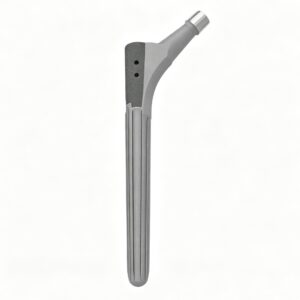
Cechy systemu głowy kości promieniowej
•Modułowe komponenty: Implant składa się zazwyczaj z dwóch części – głowy (do artykulacji z kością ramienną i łokciową) oraz trzpienia (do dopasowania wewnątrz kości promieniowej). Taka modułowość umożliwia chirurgowi niezależny dobór optymalnego rozmiaru głowy i typu trzpienia.
•Anatomiczny kształt: Głowa jest często ukształtowana tak, aby odwzorowywać naturalne wgłębienie i kontur oryginalnej głowy kości promieniowej pacjenta. Kluczowe cechy obejmują:
•Konturowanie przyśrodkowe: W celu prawidłowej artykulacji z wcięciem promieniowym kości łokciowej.
•Zmienna głębokość wgłębienia: Powierzchnia wklęsła zwiększa się wraz ze średnicą głowy, aby poprawić właściwości ścieralne.
•Płytkowanie w ”strefie bezpiecznej”: Niektóre systemy obejmują niskoprofilowe płytki zaprojektowane specjalnie do umieszczenia w nieartykulacyjnej “strefie bezpiecznej” kości promieniowej, jeśli rodzima głowa nadaje się do zachowania.
Wskazania do stosowania systemu głowy kości promieniowej
•Pierwotna alloplastyka po złamaniu: W przypadku ciężkich, wieloodłamowych złamań głowy kości promieniowej, które nie nadają się do naprawy.
•Urazy pourazowe: U pacjentów z bólem, trzeszczeniem i ograniczonym zakresem ruchu w stawie ramienno-promieniowym lub bliższym stawie promieniowo-łokciowym, często wynikającym ze zniszczenia stawu lub podwichnięcia.
•Objawowe następstwa po resekcji: Jeśli wcześniejsze usunięcie głowy kości promieniowej (resekcja) doprowadziło do niestabilności lub bólu, implant może ją zastąpić.
•Choroba zwyrodnieniowa stawów: W przypadku schorzeń takich jak choroba zwyrodnieniowa stawów lub reumatoidalne zapalenie stawów obejmujących głowę kości promieniowej.
•Operacja rewizyjna: W celu wymiany wcześniej wszczepionej, niesprawnej endoprotezy głowy kości promieniowej.